


Shaft Repair With a Forming Technique: A Complete Guide
This blog post provides step-by-step guidance on how to repair a worn shaft using a former and the epoxy paste, Belzona 1111 (Super Metal).
Shafts often operate in immersed or semi-immersed conditions, making them vulnerable to corrosion, chemical attack, vibration, friction, and abrasive media. Left unaddressed, worn shafts can shut down entire machines, halting production and causing significant revenue loss.

Belzona Solution:
- Belzona 1111 (Super Metal): This 100% solids cold-applied epoxy repair solution will not corrode and resists a wide range of chemicals, making it the perfect solution for the shaft repair. It is easy to mix and apply without the need of specialist tools and can be machined using conventional tools.
Shaft Repair with a Forming Technique: A Step-By-Step Guide
- Clean the Worn Shaft
Thoroughly clean the area to remove all the grease, dirt and other surface contaminants.

- Undercut the Shaft
One grinder fitted with a suitable disk to undercut the shaft by 1/16″ (1.5 mm) around the circumference.

- Degrease the Worn Shaft
Clean the prepared area with Belzona 9111 (Cleaner/Degreaser) to remove all surface contaminants.

- Apply Release Agent
Apply Belzona 9411 (Release Agent) to the internal surface of the former.

- Apply Release Agent to the Damaged Shaft
Apply Belzona 9411 (Release Agent) to the area surrounding the repair area.

- Mix Belzona 1111 (Super Metal)
Thoroughly mix Belzona 1111 (Super Metal) 2-part epoxy paste for metal repair until a uniform color, free of any streakiness, is achieved.

- Wet Out Former
Apply a thin layer of the mixed Belzona 1111 (Super Metal) on the internal surface of the former.

- Firmly Apply Shaft Repair System
Apply a thin layer of the mixed material onto the shaft, pressing down firmly into the roughened profile.

- Form a Peak
Form a peak towards the center of the application area.

- Position Shaft Former
Position the former around the shaft.

- Clamp Shaft Former
Secure the former in position with fasteners ensuring that the excess material is extruded from the ends of the former.

- Remove Excess
Remove excess material and allow the applied material to cure.

- Remove Former
Once cured, carefully remove the bolts and the former.

- Smooth Down
Smooth out the surface of the application area with an emery cloth.

Frequently Asked Questions
What are the advantages of using Belzona cold-curing epoxy composites for shaft repair as an alternative to welding?
Belzona’s cold-curing epoxy composites offer several advantages over welding:
Cost effectiveness: With less specialised labour, fewer safety precautions needed, and reduced downtime, the overall cost of the epoxy shaft repair method is much lower than welding.
Reduced downtime: Worn Shaft repairs can be performed in situ, avoiding the lengthy process of removing, transporting, and reinstalling heavy or complex machinery.
No thermal distortion or metallurgical change: Since there’s no high heat involved, there is far less risk of warping, cracking, or altering base‐metal properties.
Lower safety risk: Fewer hot-work hazards—no open flames, reduced risk of burns or fires, and lower exposure to weld fumes—translates into safer working conditions.
Why is repairing worn shafts so critical in rotating equipment maintenance programs?
Repairing worn shafts is essential for several reasons:
Proven durability: Case studies of Belzona repairs show that, once properly applied, cold-curing shaft repairs can last for many years under real operating conditions.
Maintaining performance and efficiency: Shaft wear leads to misalignment, increased friction, vibration and power losses. If left unchecked, these degrade efficiency.
Preventing cascade failures: Worn shafts stress other components—bearings, seals, couplings—and these parts often fail prematurely when shaft wear is not addressed.
Minimising unplanned downtime: Proactive repair avoids unexpected breakdowns, which are usually far more disruptive and expensive than planned maintenance.
Extending component and machine life: Restoring shafts to correct dimensions helps the machine run as designed, which improves longevity and mitigates shaft replacement.
What are the common causes of shaft wear, and how can wear be prevented?
Causes of wear:
- Mechanical abrasion (solid particles, seals, bearings)
- Corrosion (chemical attack, moisture, process fluids)
- Misalignment and vibration leading to fretting or uneven load distribution
- Poor or inadequate lubrication (or lubricant contamination)
- Material selection not suited to the operating environment (e.g. insufficient hardness or corrosion resistance)
Prevention strategies:
- Design equipment for maintainability (accessibility, ease of inspection)
- Use epoxy repair materials that resist corrosion and abrasion such as Belzona 1111 (Super Metal)
- Ensure precise alignment during installation, and periodic alignment checks
- Maintain lubrication regimes, using correct lubricant and cleanliness
- Monitor vibration, bearing temperatures and wear patterns to detect early onset of wear
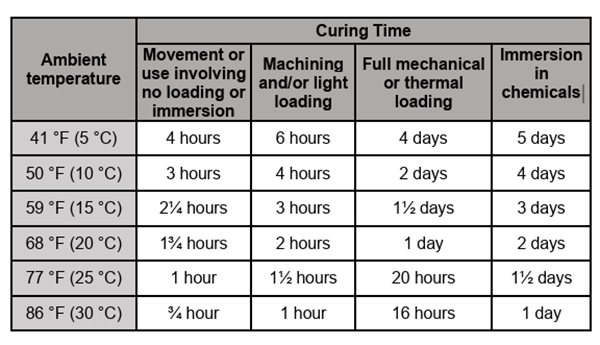
How long does Belzona’s shaft repair system, Belzona 1111 (Super Metal), take to cure?
Belzona 1111 (Super Metal) should be allowed to ambient cure as follows. Bear in mind that these curing times are for a repair thickness of approximately 6mm (0.25 inches). They will be reduced for thicker sections and extended for thinner sections.
What is the mixing ratio of the shaft repair epoxy, Belzona 1111 (Super Metal)?
For mixing small quantities of the shaft repair epoxy, Belzona 1111 (Super Metal), use:

What are the different types of shafts that Belzona 1111 (Super Metal) be applied to?
Belzona 1111 (Super Metal) can be used on pump shaft repairs, motor shaft repairs, gearbox shaft repairs, amongst others.
Learn More
How to Repair a Worn Shaft Using Injection
How to Rebuild an Oversized Keyway
How to Repair Metal Loss on Pipework (With GIFs and Video)

P.T. Tunas Tasik was established in 1960 as a general trading company. In 1982 the company concentrated its business in the field of Industrial Maintenance and Repair when it acquired the sole agency for the Belzona range of high performance polymers from Belzona Polymerics Ltd. UK.

© 2024 PT. Tunas Tasik - All Rights Reserved
Comments (0)